since 1976

since 1976
By Lee Pang Seng
THE commercial vehicle market in Malaysia might see slower inroads by the Chinese range but make no mistake, the momentum is picking up progressively and strongly. A new brand entering the market in the first quarter of 2026 is Forland.
The company introducing Forland here is Handal BCM Sdn Bhd, which is no newcomer to handling Chinese vehicles in this country. Handal BCM has been promoting Foton commercial vehicles, namely vans, in the market for quite a few years now.
And if you are wondering about the connection between Forland and Foton, we go back to 1996 in China. Foton was introduced in that country at the time as a subsidiary under the BAIC Group (Beijing Automotive Group Co Ltd). It started operations as the Beiqi Foton Motor Co Ltd in Beijing.
Shortly after it started, Foton introduced Forland Motors Group as a sub-brand that focused on light- to medium-duty trucks and vehicles, while it oversaw the heavy-duty truck sector. While there might be some overlap in vehicle range, the strategy was clearly set in the direction of market penetration.
The Forland range was developed and designed for urban logistics, resulting in compact vehicles to handle inner and intra-city functions. This included cargo and dump trucks, and in recent times, there is an EV (electric vehicle) alternative for the respective models being introduced progressively into the Chinese market and beyond.
That’s what the Forland truck to be launched here – the Forland L7 – would be aimed at; urban logistics. Handal BCM CEO Datuk Donald Choo sees a ready market as the company’s Foton commercial van customers operate mostly in this market segment and are looking for medium-duty truck to serve or expand their operational needs. Handal BCM holds exclusive distribution rights for Forland.


Being priced 30-per cent cheaper than rival brands, mostly the Japanese makes, he expects the Forland L7 truck to gain good traction among potential customers. Having been satisfied owners of attractively-priced Foton commercial vans, he believes that these customers need no further convincing regarding Forland’s product quality, function, reliability and durability.
We tend to concur after visiting Foton’s and Forland’s manufacturing centres in Beijing and Qingdao, as part of the recent Global Partners Conference 2026. We were impressed by the efforts taken in product development to achieve commercial vehicles that are quiet and comfortable in operation while having parts and equipment that would go the distance.
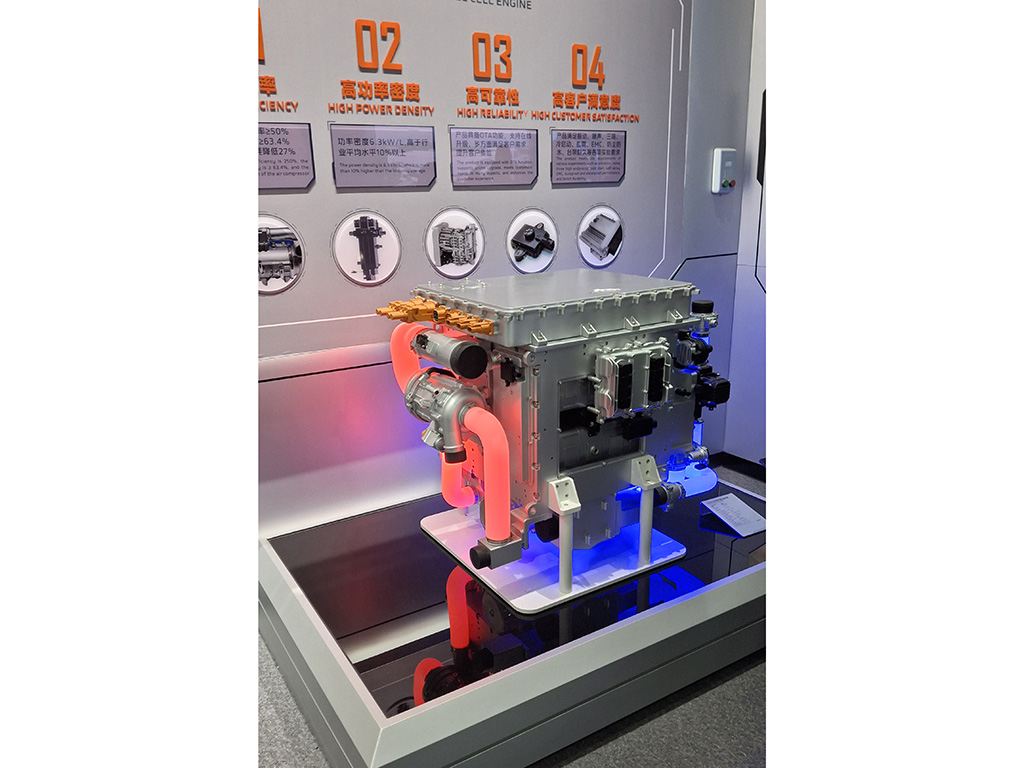
The power source is from a range of Cummins engines that are produced in China; the engines for the Chinese market are painted in orange to reflect the Cummins roots while those for vehicles to be exported are painted in red. During the visit at the Foton engine factory in Beijing, an engine that covered some two million kilometres without an overhaul was put on proud display.
Foton has impressive credentials that include becoming China’s first commercial vehicle manufacturer to surpass more than 10 million cumulative sales in 2021 and having the 12th million vehicle rolled off the line at Foton Brazil in 2025. It is actively involved in fuel, electric, hybrid and hydrogen technologies in the development of its vehicles.
We also visited a dedicated centre with sound rooms that several different vehicle models – trucks and vans - were being put to the test to achieve a quiet running vehicle. The facility was just as good as those that we have been to in car development centres. It clearly shows that driver comfort is a key part of commercial vehicle development today.
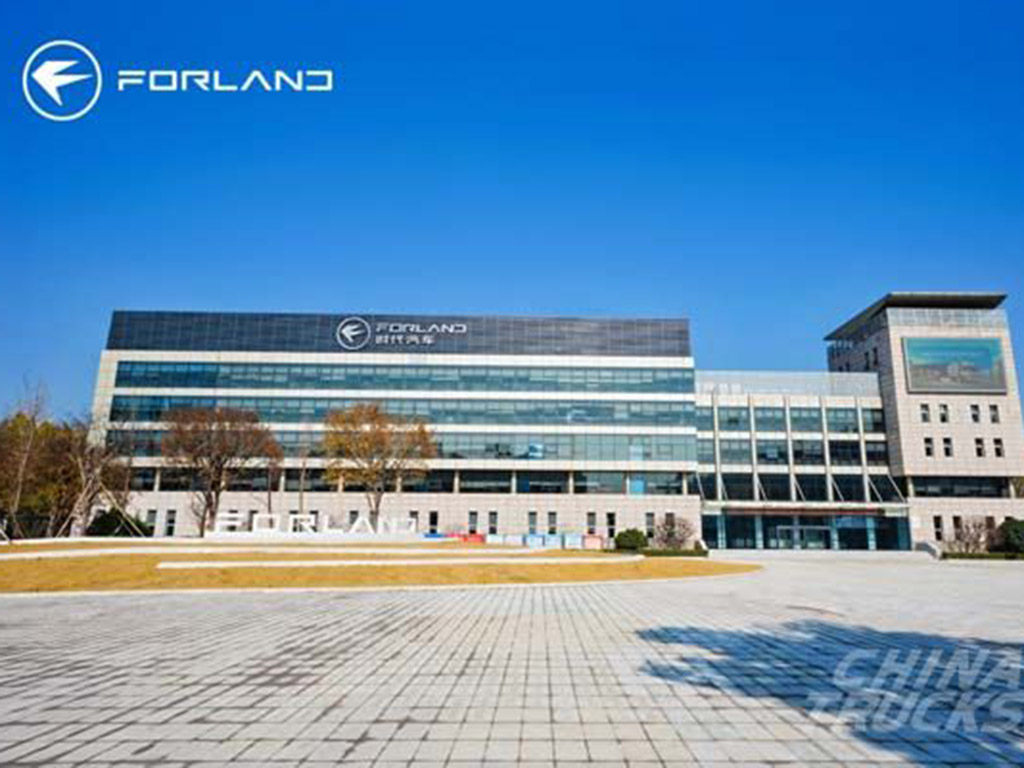
The Forland manufacturing base in Qingdao, some 800 kilometres south of Beijing, was equally impressive. It was a sprawling complex but we were only taken to the production line where the Forland L7, which is due here in the first quarter of 2026, was being built and to the section where a variety of vehicle parts and materials were being put to different tests to gauge their respective suitability, functionality and durability.
Robotics and automated processes were applied where necessary while human power, mostly the younger set, prevailed mostly in the vehicle assembly section. The paint area was fully automated with human personnel on hand to monitor the operation. The plant’s production volume is expected to exceed 250,000 vehicles for 2025.
Forland’s foray into global markets started in 2004 when it set up a vehicle assembly facility in Vietnam. In 2013, it secured a ‘landmark’ order from Algeria that sets a record in China for light-duty dump truck exports. However, its overseas expansion push took off in earnest in September 2024 to ‘connect the future with green technology and share ecological value with the world’. The goal is to reach 150 countries and regions by 2030, and its global expansion includes the localised construction of vehicle parts that sees technology sharing, technology transfer and joint venture factory establishment.
Forland’s president Liu Xuguang said the company’s new brand strategy included fully upgrading its development strategy based on key trends in new energy transition, digitalisation, intelligence and globalisation. “Rapid progress in intelligent technology is pushing the transportation industry to shift from traditional methods to smart logistics. Advanced technologies like IoV, big data models and artificial intelligence bring more possibilities for automation, intelligence and efficiency in the logistics process.”
As to intelligent driving products, Liu added that Forland’s light and micro trucks were equipped with ‘relatively mature’ L2+ advanced driving while it was fully engaged in research and development on L4-level intelligent driving.
The full range of EVs at the Global Partners Conference 2026 revealed Forland’s development direction in clean energy. The event also saw new models being introduced, including the Forland L7 that might be relevant to the Malaysian market in the near future. This is the L7 automatic truck that was developed for global markets and features ‘advanced smart technologies for strong performance’.
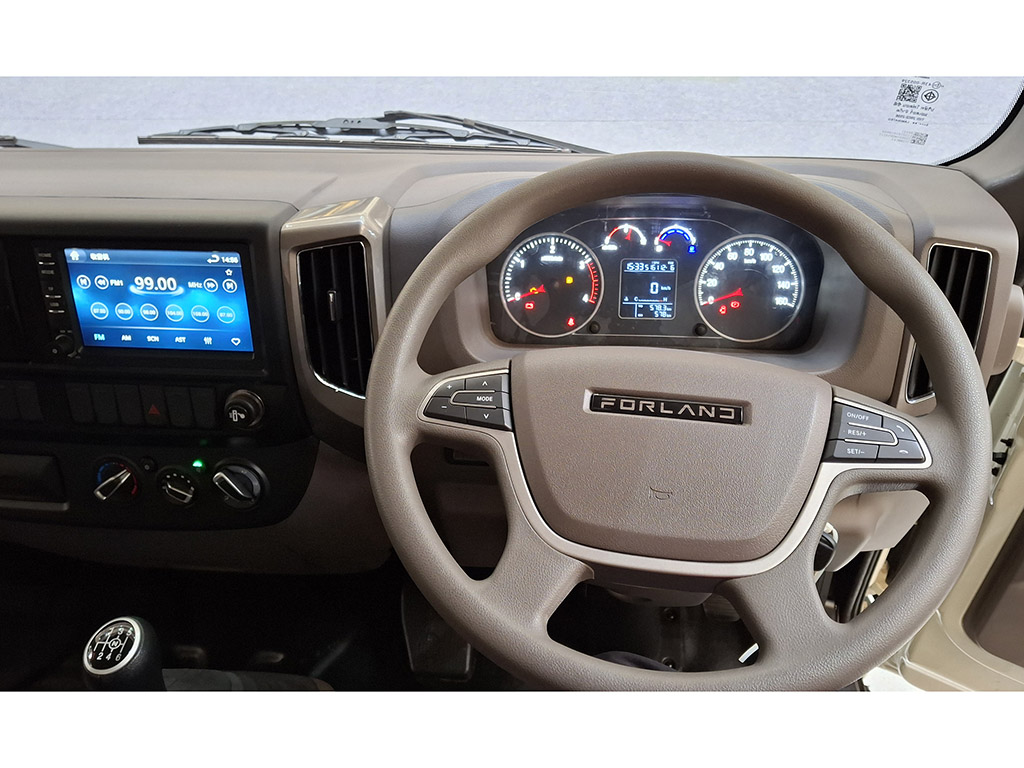
The Forland L7 that would be launched here first is a 7.5-tonne light-duty truck powered by a Cummins 3.8-litre diesel engine with ZF manual transmission. The engine output is rated at 123kW (168hp) for the engine in the automatic model (which has a ZF six-speed AMT transmission) and we believe this would be the same for manual transmission model.
Engine details gleaned from the Foton plant gives general output for this particular engine as 105-140kW (141-190hp) and a maximum torque of 700Nm, depending on engine tuning. This engine is said to meet Euro V and Euro VI specifications. Cummins might have American roots but its entry in China goes decades back and is firmly established as an engine supplier in the commercial vehicle sector.
Forland says the L7 automatic truck is developed based on millions of kilometres of real-world road data and in-depth research on driving habits across different regions. It comes standard with dual driving modes – Economy and Power – to optimise fuel economy and driving performance.
For a medium-duty truck, the L7 could match many cars on Malaysian roads in safety equipment and features as it comes standard with AEBS (automatic emergency braking system), LDWS (lane departure warning system), ESC (electronic stability control) and EBS braking that meet EU standards.
Additionally, its ADAS (advanced driver assistance system) integrates millimetre-wave radar and cameras to detect pedestrians and vehicles up to 150 metres away, with an optional 360-degree panoramic view system. Features such as an adjustable steering wheel, air-suspension seat and ‘powerful’ air-conditioning system should make logistics operation more comfortable. The L7 also boasts of a reinforced chassis, upgraded rear axle torque (+17%), wider 235 tyres and a maximum payload capacity of seven tonnes.
Handal BCM is also looking at the Forland T5 mini-truck to cater to those who prefer a smaller vehicle for their respective needs in urban logistics. This would, however, have to wait until Forland comes up with a righthand drive version before it could be introduced here.