since 1976

since 1976


UMW Toyota Motor (UMWT) continues its journey towards carbon neutrality with the introduction of the new Toyota Vios HEV (Hybrid Electric Vehicle). This is the first time that the Vios range, currently in its fourth generation, has an HEV variant and reflects Toyota’s Multipathway approach of offering customers choices for their mobility needs. With this approach, no customer is left behind during the transition towards electric mobility, and each can still contribute to reducing carbon emissions.
The Vios HEV is also available in a GR Sport (GR-S) version with sportier looks and enhanced performance. Both models are assembled locally and will be offered alongside the Vios 1.5G and Vios 1.5E, expanding the choices for the Vios, which has been among the bestselling models in the non-national segment since it was first launched over 20 years ago.
VIOS HEV
The Vios HEV shares the same body styling as the Vios 1.5G with a fastback silhouette and ‘Power Design’ theme. With the fourth generation, the new Vios has adopted an all-new architecture known as DNGA, which is used for Toyota’s smaller models. DNGA has been developed with weight-saving approaches that do not compromise rigidity and strength.
For the new HEV version, the structure has been given additional reinforcements for higher quality, rigidity, and safety. With the hybrid battery pack adding more weight, various measures have been taken to reduce weight in areas such as the bonnet, fenders, door panels, and boot lid. In addition to acoustic glass for the windscreen, further measures have been implemented to reduce wind, engine, and road noise.
To differentiate the Vios HEV from the Vios 1.5G, some exterior areas receive different surface treatments. Dark chrome plating is used for the trim around the side windows, while there is a gun metallic finish for the grille and the boot lid garnish. A HEV emblem on the boot lid also identifies this model as having a HEV powertrain. The wheels have an exclusive design with a machined finish and black paint.
For the exterior body colour, customers have 5 choices - Platinum White Pearl, Attitude Black Mica, Scarlet SE, Silver Metallic, and Celestite Grey Metallic.
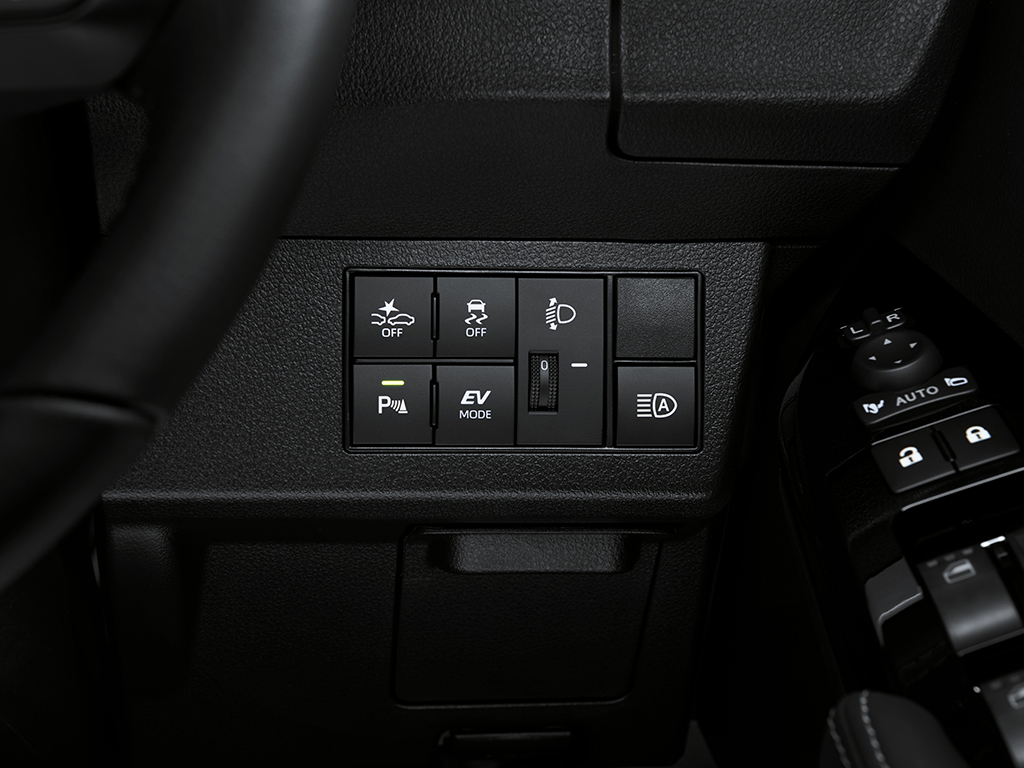
Inside, there is the same spacious environment with a premium look and feel. The cockpit is driver-oriented, with all controls and switches within easy reach. The 7-inch TFT digital instrument panel has a HEV-specific layout without a tachometer, while the speedometer is a large digital display. There are four patterns to choose from, with graphic elements that inform the driver about the operation of the HEV powertrain. Drivers can monitor battery charging and see if the powertrain is operating economically. EV mode is displayed when activ
The Vios HEV has a larger 10.1-inch Display Audio panel, compared to the 9-inch size of the one in the Vios 1.5G. The display panel is used for the audio system and infotainment system as well as the 3D Panoramic View Monitor (PVM). With wireless Android Auto and Apple CarPlay, smartphone apps (Waze, Spotify, etc) can be easily transferred to the screen and used from there.
Like the Vios 1.5G, the Vios HEV also comes with 64-colour ambient lighting to suit different moods or preferences. The HEV variant further enhances the experience with additional lighting on the instrument panel and door trims, on top of the centre console areas which can be easily set with a switch.
The front seats, which have been designed for good support to reduce fatigue, have leather upholstery for a premium feel. The headrest shape and position are also optimised to provide maximum support when seated and ease of entry and exit.
Standard features and equipment are similar to those for the Vios 1.5G. These include a fully automatic air conditioning system with a clean air filter, a new 4K Front Digital Video Recorder (DVR), Smart Entry & Pushstart System (with a Touch Sensor on the front door handle), and 3 USB charging points (two Type C).
VIOS HEV GR SPORT
The Vios HEV GR-S is the latest addition to the GR Sport range, which was first introduced in 2020.
The positive response to the concept, which offers not only sportier looks but also enhanced performance, led Toyota to offer it in other models besides the Vios.
The Vios HEV GR-S shares the same body as the Vios HEV but includes additional accessories for a sportier look. These include a GR-S Aerokit, which lowers the body visually with a sculpted front bumper, side skirts, and rear bumper with a diffuser. A spoiler is also mounted on the boot lid. Designed specially for the Vios HEV GR-S, the Aerokit also provides practical aerodynamic benefits.
Other exterior items specific to this variant include black door mirror covers, a GR badge, and exclusive 17-inch alloy rims with a machined finish and black paint. The 205/50R17 tyres are also exclusive to this variant to provide increased grip and stability.
Besides Platinum White Pearl, Attitude Black Mica, and Scarlet SE, customers can also order the Vios HEV GR-S with a Black Mica roof (only with White Pearl and Scarlet SE body colours).
The interior is similar to the Vios HEV but includes exclusive features such as a black Soft Pad with Silver stitching on the dashboard, and GR-S Leather Suede (Combination Leather) for the seat upholstery. The carpet mats also have the GR-S logo on them, while the black and red GR badge is inserted on the 3-spoke steering wheelAdditional chassis tuning differentiates the driving dynamics of the Vios HEV GR-S from the Vios HEV. The suspension layout is identical, with MacPherson struts at the front and a torsion beam at the rear. For the Vios HEV GR-S, the engineers have tuned the coil springs and shock absorbers for a sportier feel, sharper handling, and quicker response. Rear-end lift is also reduced by the GR-S Aerokit, improving stability at higher speeds. The Electric Power Steering (EPS) is also tuned to provide greater responsiveness.
Often, when cars are tuned for sportier performance, comfort is sacrificed. This is not the case with the Vios HEV GR-S, which offers a comfortable ride for daily driving while maintaining the fuel efficiency benefits of the Toyota Hybrid System.
TOYOTA HYBRID SYSTEM
The Toyota Hybrid System (THS) in the Vios HEV is the product of over 25 years of continuous development since the Prius was launched in 1997 as the world’s first sedan with a hybrid electric powertrain. THS offers one approach to electrification as a means towards decarbonisation, and Toyota believes it is the best solution for the Malaysian market at this time.
To support the introduction of HEV models, UMWT invested in a new assembly plant, which has also been designed for electrified models. This began with the Corolla Cross HEV in 2022, which is now joined by the Vios HEV as the second locally assembled model with THS.
The advantage of HEVs is that they are self-charging and only require readily-available petrol to run. There is no need for the driver to worry about finding a charging station to recharge the battery during a long journey, eliminating the concern of ‘range anxiety’ that drivers of EVs experience. A HEV can be driven like any car with a petrol engine while offering far greater fuel efficiency as the electric motor also contributes power to move the vehicle.Toyota’s HEV technology has been constantly improved, and the THS in the Vios HEV is now in its 4th generation. Over the years, the system has become more compact, more efficient, and more powerful, and battery technology has also been constantly advanced.
‘Hybrid’, as the term suggests, is a combination of two or more power sources, and in the case of Toyota’s HEV powertrain, there are two electric motors as well as a petrol engine. Having two electric motors improves operating efficiency. The primary motor is used to propel the vehicle while a smaller secondary one is for starting and charging the battery pack.
THS employs the engine and motor at the same time, varying the power drawn from each depending on the driving conditions. Typically, when moving off, only the electric motor is used, giving efficient and strong acceleration. As the speed rises, the computer brings in the engine to provide additional power. The switching and variation of power sources is entirely automatic and seamless, with no involvement by the driver.
Fuel savings are achieved whenever the electric motor is used. Besides starting off, it may be possible to run on just the electric motor for a short distance in EV mode, which gives a smooth and noiseless experience similar to a pure electric vehicle. During cruising, when there is no strong acceleration needed or on flat terrain, less of the engine power might be needed so the electric motor will be used more to maintain the desired speed.
As mentioned earlier, a HEV does not need external charging of its battery pack. The recharging takes place as the car is running. Even when braking, a regenerative process recovers the energy that is usually lost and channels it to the battery pack. The driver does not need to do anything as recharging is automatic when needed.
Should there be some occasions when the energy in the battery pack becomes low (due to extended high-speed driving), then the engine will have a greater role in running the car. As long as there is sufficient petrol in the fuel tank, the car can continue running – unlike a fully electric vehicle, which would be unable to continue. With THS, the reduced use of the engine significantly increases the range with a full fuel tank, which has a volume of 36 litres.
There are various THS powertrains today for different models and for the Vios HEV, a 1.5-litre DOHC 16-valve petrol 4-cylinder engine with Dual VVT-i is used. This all-aluminium engine is from the NR family which is well known for high thermal efficiency, low emissions and reliability. Instead of a 7-speed CVT, there is an E-CVT to deliver power to the front wheels.
Adapted for use with the THS in the Vios HEV, the engine produces 91 PS of power at 5,500 rpm and maximum torque of 121 Nm between 4,000 - 4,800 rpm. Factory testing using the NEDC standard has shown the fuel consumption to be as low as 3.6 litres/100 kms (27.8 kms/litre), around 31% less than the Vios 1.5G.
The motor generator for moving the car generates 80 PS with 141 Nm and typical of electric motors, this maximum output is available from the time the car moves off. Although the maximum output of the petrol engine is lower than that in the Vios 1.5G, the combined output of the THS is 111 ps, which is almost 5% more than the Vios 1.5G, enabling stronger acceleration.
The motor is powered by a 4.3 Ahr lithium-ion battery pack installed under the rear seats, thus ensuring similar luggage capacity as the Vios. The THS has been tested extensively in local conditions and to keep it at optimum temperature, it receives cooling air drawn from the cabin. With the cooling system and ability to operate in a wide range of temperatures, the battery pack should last as long as the car under normal usage conditions.
SAFETY
While DNGA enhances the strength and rigidity of the structure for better Passive Safety during an accident, Active Safety helps the driver avoid an accident or minimises the effects of a collision. The Active Safety system is integrated and known as Toyota Safety Sense (TSS). This system uses dual cameras mounted on the top of the windscreen to monitor the road ahead for the on-board computer to assess the situation.
Besides a Pre-Collision System (PCS) and autonomous emergency braking (AEB) to prevent a collision, there are also systems to help keep the car safely within its lane. There is also a Lane Keep Control (LKC) function which helps to keep the car centred within its lane while in motion. This can reduce fatigue on long journeys as the driver will not have to keep adjusting the steering wheel.
Additional features for TSS are Adaptive Cruise Control (a more intelligent form of cruise control), and Front Departure Alert (enhanced with Vehicle Approach Notice), alerting the driver when the vehicle ahead moves off and helping warn pedestrians of the vehicle’s presence in EV mode. Auto High Beam automatically switches between High and Low beams when necessary.
The areas behind and along the sides of the car are blind spots where the driver may not be able to spot other vehicles. To alert the driver of vehicles in the blind spot, there is a Blind Spot Monitor on both sides which will warn via an indicator on the door mirrors. Additionally, during reversing, sensors will monitor both sides of the car and alert the driver if there is a vehicle approaching from the sides. Reversing manoeuvres are also helped by the standard reverse camera and 3D PVM.
ASEAN NCAP assessed this generation of the Vios when it was launched in 2023 and gave it the maximum safety rating for 5 stars.
WARRANTY
As with the Corolla Cross HEV assembled at UMWT’s own assembly plant in Bukit Raja, Selangor, the Vios HEV and Vios HEV GR-S come with a 5-year warranty. The owner can enjoy the full 5-year coverage as there is no limit on mileage covered after original registration.
For peace of mind, the hybrid battery pack has a separate warranty of up to 8 years, also with unlimited mileage. Furthermore, unlike the warranties for hybrid battery packs of some other brands, UMWT’s warranty package includes the Inverter and Power Management Control ECU for the same length of time.
Customers can also opt to extend the battery pack and related hybrid components warranty for another 2 years, making for a total of 10 years. This longer warranty, which is transferable, will enhance resale value and give more peace of mind to owners
Owners are assured of full after-sales support, including replacement parts, at all authorised Toyota service centres nationwide. Additionally, with 24SEVEN Road Assist, assistance is available 24-hours a day, 7 days a week, by just calling 1800-888-247 or via the Toyota MY app from anywhere in Malaysia.
LINK HERE
Price list – Company
Price list – Individual
Product Info
BROCHURES
Vios HEV
Vios HEV GR Sport